 Scale


Creative testing on Facebook ads means running new ad concepts against each other in a controlled way to find winners quickly and cheaply, then move them into scaling campaigns. To test 100+ creatives a month without wasting spend, separate testing from scaling, test ideas before variations, set kill rules before launch, and feed every result into the next brief.
Most accounts don't fail at testing because they test too little. They fail because their tests can't produce a clear answer. Fifteen ads that are really two ideas in different sizes, judged after one afternoon, tell you nothing.
This guide covers the system we use to make volume useful.
Why creative is now the targeting in Meta ads
Meta's delivery system does most of the targeting work for you. Broad audiences, Advantage+ campaigns and automated placements mean the algorithm decides who sees your ad. What it can't do is invent the message.
The creative is now the targeting: a hook aimed at new moms finds new moms, a hook about joint pain finds people with joint pain.
That has two consequences:
- The brands that scale are the ones that feed the account a steady supply of new ideas.
- Ads fatigue faster as spend rises, so a testing program isn't a project. It's a permanent production line.
If you're seeing CPA climb as you push budget, that's usually the first place to look (we cover it in why CPA rises when scaling Meta ads).
A Facebook ad creative testing framework in 5 steps
1. Build a testing matrix before you build ads
Start with research, not production. List three things:
- Angles: the reasons someone buys. A cooking fat can sell on health, taste, tradition, or cost per meal.
- Avatars: who is buying. The same product speaks differently to a busy parent and a competitive athlete.
- Formats: UGC, static, founder-led video, street interview, podcast clip, carousel.
Every ad you make should sit in one cell of that grid and carry a one-line hypothesis: "Health-led UGC aimed at parents will beat our taste-led statics on cold traffic." Without a hypothesis, a winning ad is just luck you can't repeat.
2. Separate concepts from iterations
This is where most "high-volume" testing goes wrong. Count your ideas, not your files.
- Concepts change the idea: new angle, avatar, desire, or format.
- Iterations keep a proven idea and change one variable: hook, first frame, headline, length, voiceover, or thumbnail.
Getting the mix right: weight the month toward new concepts while the account is young, then shift toward iterations once you have winners worth exhausting.
Both matter. Concepts find new pockets of demand; iterations extend the life of what already works.
3. Give testing its own campaign
Keep tests out of your scaling campaigns. A dedicated testing campaign lets you control how much each new idea gets, so a fresh ad isn't starved by a proven winner that the algorithm already trusts.
A simple structure:
- Testing campaign. One ad set per concept, with three to six ads inside it (the concept plus its first hook or format variations). Fixed daily budgets at the ad set level so each concept gets a fair shot.
- Scaling campaign. Broad or Advantage+, holding only proven winners. Budget moves here as winners graduate.
- Retargeting if your spend supports it, built from proven offer-led creative.




 Winner




 Winner





 Winner


4. Set kill rules before you launch
Decide the rules in advance, or you'll make them up based on mood. Our working rules of thumb:
- Let each ad spend roughly two times your target CPA before calling it.
- Kill early if the leading signals are clearly weak at half that spend: poor thumb-stop rate, low hold rate, or click-through well below your account average.
- Keep anything at or under target CPA and move it into iteration.
- Graduate an ad to scaling once it holds target CPA across a few days, not one good day.
The exact thresholds depend on your margins. What matters is that they're written down and applied the same way every week.
5. Close the loop every week
A testing program is only as good as its review. Once a week, sort the past week's tests into three buckets:
- Winners
- Near-misses worth iterating
- Losers
Write down why you think each one landed where it did. That note becomes the brief for next week's production.
The real asset: over a few months, you build a library of proven angles and hooks specific to your customer.
How many creatives per ad set: three to six for tests
There's no single right number, but a few principles hold.
More ads rarely helps a test. Meta caps ad sets at 50 ads, but the algorithm quickly concentrates spend on one or two ads it likes early, and the rest get too little delivery to judge. That's fine for scaling; it's a problem for testing.
For testing, three to six ads per ad set is a practical range. It's enough to compare a concept's main variations, and small enough that each ad gets meaningful spend. If you have twelve variations of one idea, split them into two ad sets rather than cramming them into one.
For scaling campaigns, you can run more ads per ad set, because the goal there is efficiency, not a clean read. Keep an eye on ads that get almost no spend: they're not being tested, they're just sitting there.
The other constraint is budget. Each ad set needs enough conversions to get through Meta's learning phase, which Meta describes as roughly 50 optimization events in a week. If your budget can't support that across all your testing ad sets, test fewer concepts at a time rather than spreading thin.
Dynamic creative testing on Facebook ads: when it helps
Dynamic creative lets you upload several images or videos, primary texts and headlines into a single ad, and Meta mixes and matches them to find the best-performing combination. Meta has been folding this into Advantage+ creative and the flexible ad format, but the idea is the same.
It's useful for one job: optimizing inside a concept that already works. If a UGC concept is a winner, dynamic creative can tell you which headline or first frame it prefers.
It's a poor tool for comparing concepts. Asset-level reporting is directional, the combinations aren't evenly distributed, and you can't cleanly say "angle A beat angle B." For concept testing, use separate ads in separate ad sets, as above.
Testing at volume in practice: two client examples
Institute of Human Anatomy: 200+ creatives to build a channel from zero
The Institute of Human Anatomy had a huge organic audience but no paid channel, and a mandate to sell a digital course to cold traffic without leaning on that following. Over a one-year partnership we produced more than 200 creatives.
The volume wasn't the point on its own. It gave the account enough ideas to test hooks, angles and messaging at pace, and to keep feeding the best performers back in.
Every insight from the ad account informed the creative, and every creative test informed the funnel. We also rebuilt their landing page from the ground up.
The result: a channel that went from roughly $0 to around $40K a month, with ROAS holding around 2x on the digital product.
Mitchell Brands: hundreds of creatives across four brands
Mitchell Brands needed creative for four beauty brands at once, each with its own audience.
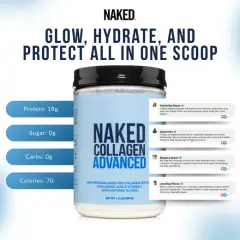
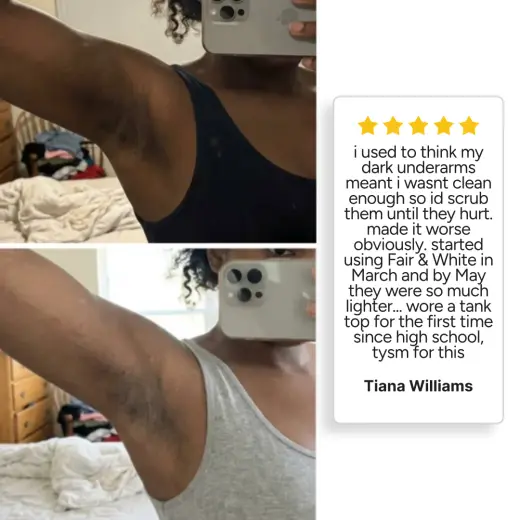
We've produced hundreds of creatives across Meta and TikTok, using AI-led static imagery from day one and a growing pipeline of AI-led video as the tooling matured, plus a whitelisting rollout with partnered creators.
 Institute of Human Anatomy
 DOGTV
 Greenspoon
 Alphatech
 Mitchell Brands
 Greenspoon
 Institute of Human Anatomy
 Alphatech
The lesson from running four brands in parallel: the system matters more than any single ad. The engagement runs on weekly strategy calls and daily Slack comms, keeping every workstream in motion across all four brands.
Creative testing checklist for your next weekly review
- Every ad has a written hypothesis and sits in one angle, avatar and format cell.
- You can count your concepts separately from your iterations.
- Testing lives in its own campaign, separate from scaling.
- Testing ad sets hold three to six ads, each with enough budget to be judged.
- Kill, keep and graduate rules are written down before launch.
- Winners move to scaling only after holding target CPA for several days.
- Dynamic creative is used to optimize winners, not to compare concepts.
- A weekly review turns results into next week's briefs.
- Creative production runs on a steady cadence, not occasional big batches.
Want a deeper check? The 62-check Meta ad account self-audit tests your account against these and 50-plus other points, starting with creative volume, hook depth and angle testing in its first zone.
Whitelisted creator ads are another strong testing format; see our guide to creator whitelisting on Meta.
Get a second pair of eyes on your testing
At the top tier we deploy 150+ new assets a month per client, and across our portfolio we test 5,000+ pieces of content monthly, so we've seen what separates useful volume from noise.
If your account is testing a lot and learning little, book a free Growth Audit and we'll show you where the system breaks. You can also see how our UGC and creator ads and Meta ads management work together.